You built something great. Now what?
Most products struggle within their first year to onboard a paying customer. Not because they’re bad, but because nobody planned how to sell them. In fact, a go to market strategy is your roadmap from product creation to paying customers. It tells you who to target, where to find them, and how to turn interest into revenue.
Without this plan, companies waste money on ads that don’t work. They guess at pricing. Additionally, they pick the wrong channels. Meanwhile, competitors with clear plans steal the market. This isn’t some academic exercise. Instead, it’s the difference between growth and going home.
What Go to Market Strategy Really Means
A go to market strategy answers five simple questions. Who needs this product? Where do they spend their time? What will they pay for it? How do we reach them? How do we turn them into customers?
Think of it as your product’s launch playbook. Essentially, it combines market research, customer insights, and competitive analysis into one focused plan. For example, tech companies use it to test if their product actually solves problems. Similarly, SaaS businesses use it to figure out subscription pricing. Meanwhile, retailers use it to pick distribution channels.
The best part? The GTM framework adapts. First, you track metrics like customer acquisition cost and conversion rate, then adjust based on what works. Therefore, new product development needs this. Likewise, market expansion needs this. Any business trying to make money needs this.
The Building Blocks of a Strong GTM Plan
Know Exactly Who You’re Selling To
You need more than “everyone who needs our product.” First, start with demographic segmentation. Age ranges. Income brackets. Job titles. Geographic locations. That’s your foundation.
Then dig deeper with psychographic segmentation. What keeps these people up at night? Furthermore, what problems make them desperate for solutions? For instance, a B2B tool might target mid-sized companies struggling with messy workflows. On the other hand, a fashion brand might focus on environmentally conscious shoppers under 35.
Market segmentation takes your broad audience and creates focused groups you can actually reach. As a result, this cuts wasted marketing spend in half. Additionally, it shortens your sales cycle length because you’re talking to the right people from the start.
Early adopters matter most at first. Indeed, they’ll forgive bugs and missing features if you solve their biggest pain points. Their feedback shapes everything that comes next.
Craft a Value Proposition That Sticks
Your value proposition answers one question: why should someone choose you over the competition?
Don’t list features. Instead, address specific customer pain points with clear outcomes. For example, “We help marketing teams cut reporting time by 10 hours per week” beats “advanced analytics dashboard” every time.
Product positioning defines where you sit in the market. Are you the premium option? The budget choice? Or the innovative disruptor? Meanwhile, competitive positioning shows what makes you different from everyone else fighting for the same customers.
Look at the Apple iMac G3 launch in 1998. At the time, every computer company talked about processor speeds and RAM. However, Apple talked about design and simplicity. That product presentation changed brand perception overnight because it spoke to what people actually cared about. Consequently, sales exploded.
Get Your Pricing Strategy Right
Pricing affects everything. Price too high and nobody buys. On the flip side, price too low and you can’t sustain the business.
Subscription pricing works well for SaaS companies that want predictable revenue. In this model, customers pay monthly or yearly. Alternatively, transactional pricing fits products people buy once, like physical goods or one-time services.
Your pricing model needs to cover your cost structure while staying competitive. First, test different price points during your go to market strategy development. Then, watch what converts. Next, calculate your profit margin against customer acquisition cost to see if the math works long term.
Many companies start with lower pricing to grab market share quickly. Later, once brand positioning strengthens, they raise prices.
Pick Marketing Channels That Actually Work
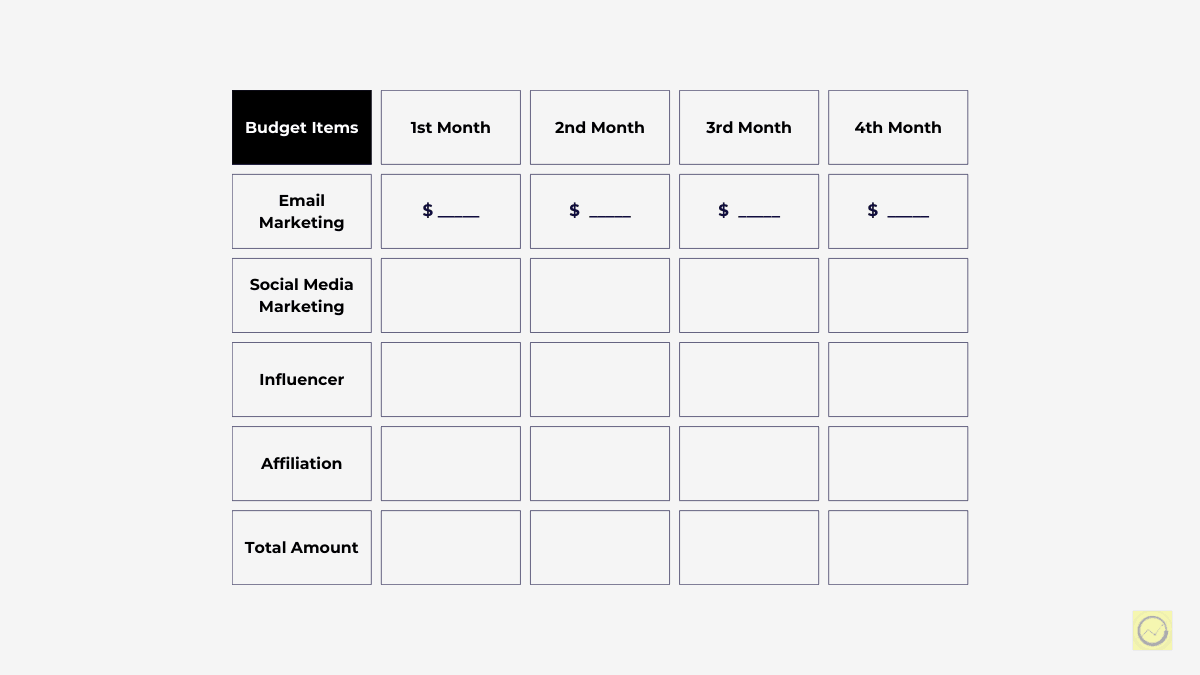
Where does your target audience spend time? That’s where you need to be.
Digital marketing dominates now, but the specific channels matter. For instance, social media marketing works for consumer brands targeting younger audiences. Meanwhile, SEO marketing captures people actively searching for solutions. Similarly, inbound marketing attracts leads through helpful content. In contrast, outbound marketing pushes your message through ads and outreach.
Your promotion strategy should match customer behavior. For example, B2B buyers might hang out on LinkedIn and industry blogs. On the other hand, D2C customers might scroll Instagram and TikTok.
Distribution channels determine how your product reaches customers. Direct sales through your team. E-commerce on your website. Retail partnerships. Marketplace platforms. Therefore, the sales channels you choose should align with how people prefer to buy.
Map Your Sales Strategy to the Buyer Journey
The buyer journey has stages. Awareness (they discover the problem). Consideration (they research solutions). Decision (they choose one).
Your sales strategy needs to guide people through each stage. At awareness, educate them about the problem. At consideration, show why your solution works best. At decision, make buying easy.
Track your sales funnel carefully. If 1,000 people visit your site but only 10 buy, something’s broken. Look at conversion rate at each stage. Find where people drop off. Fix those spots.
A strong go to market plan identifies these friction points early. Testing and adjusting improves both sales cycle length and return on investment.
How to Build Your GTM Framework Step by Step
Start With Solid Research
Market research shows you what’s happening in your space. What trends are growing? What needs aren’t being met? Surveys and interviews with potential customers reveal what actually drives their decisions.
Competitive analysis examines what others are doing. What are their strengths? Where are they weak? What market opportunity are they missing?
This intelligence shapes everything. Your product differentiation. Your messaging. Your positioning. AI content marketing fails when pages look the same because companies skip this research and just copy each other.
Define Your Business Strategy and Growth Path
What’s your primary goal? Rapid market entry even if margins are thin? Or sustainable profitability from day one?
Your business strategy sets the direction. Your growth strategy maps how you’ll scale. Will you expand to new customer segments? Launch new products? Enter new geographic markets?
These decisions affect your entire go to market strategy. A growth strategy focused on fast revenue generation might accept higher customer acquisition cost initially. One focused on efficiency optimizes CAC from the start.
Set Clear Metrics and Track Them
You need to know if your plan works. KPIs tell you.
Customer acquisition cost shows how much you spend to get each customer. Conversion rate reveals if your messaging resonates. Sales cycle length indicates how smooth your process runs. ROI confirms whether your investments pay off.
Performance metrics keep everyone honest. When numbers drop, you know something needs fixing. GTM strategy that has given 70 faster acquisition shows what happens when you obsess over the right metrics.
Launch Small, Learn Fast, Then Scale
Start with a minimum viable product. The MVP includes only essential features. This lets you test assumptions without betting the farm.
Early adopters will try your MVP and give you feedback. Listen to them. Their input shapes your final product and confirms product market fit.
If people don’t use the MVP, they won’t use the full version either. Better to learn that early when you can still pivot.
Real Examples That Show It Works
ChatGPT’s product launch example demonstrates perfect GTM execution. OpenAI identified people struggling with complex research and writing tasks. Their value proposition focused on conversational AI that anyone could use without technical knowledge. Marketing channels relied on word-of-mouth and organic social media buzz. The sales strategy started with free access to build massive adoption before introducing paid tiers.
Every piece of their go to market strategy aligned. Users shared screenshots of helpful responses. Developers built applications on top of the platform. Within two months of launching in November 2022, ChatGPT reached 100 million users, becoming the fastest-growing consumer application in history. Brand perception shifted from “chatbot” to essential productivity tool across industries.
Modern SaaS companies follow similar patterns. They segment their target audience carefully. They test messaging until it clicks. They obsess over pricing models and CAC. 15 best go-to-market cheat codes break down templates you can use.
Mistakes That Sink GTM Plans
Skipping Customer Pain Points Research
Building a product without understanding customer problems is like shooting in the dark. Teams assume their features will sell themselves. They won’t. Your market entry strategy must clearly articulate which pain points you solve and why that matters.
Getting the Timing Wrong
Launch too early before the market’s ready and you’ll struggle. Launch too late after competitors establish themselves and you’re fighting uphill. Market research helps you spot the right window. External factors like economic conditions or regulations can shift timing too.
Letting Sales and Marketing Work in Silos
When these teams don’t communicate, everything falls apart. Marketing generates leads that sales says are worthless. Sales complains about messaging that doesn’t match reality. Customer experience suffers.
A unified go to market plan gets everyone working toward the same goals with consistent messaging.
Ignoring Post-Launch Data
Your product launch strategy doesn’t stop when you ship. Monitor your performance metrics constantly. What marketing campaigns work? Which sales channels convert? Where do people drop out of the buyer journey?
Adjust based on what the data shows. Refine product positioning. Test new marketing channels. Keep optimizing.
How Different Industries Use This
Tech startups validate their innovations through a go to market strategy before scaling. SaaS platforms customize it for recurring revenue models and longer customer relationships. D2C brands apply it to create seamless customer experience across every touchpoint. B2B companies adapt it for complex sales cycles with multiple decision makers.
The fundamentals stay consistent across all of them. Understand your target customer. Define your value proposition clearly. Choose marketing channels where your audience lives. Measure everything. Iterate based on results.
Wikipedia’s overview of go-to-market strategy provides more background if you want to go deeper.
Making Your Strategy Work
A go to market strategy turns ideas into revenue. It replaces guesswork with a repeatable system for launches and expansion. Companies that invest time upfront in market segmentation, pricing strategy, and channel selection consistently outperform those that wing it.
The best GTM frameworks evolve over time. They incorporate feedback from customers and sales teams. They adapt to market shifts. They balance aggressive growth targets with sustainable economics.
Your marketing plan becomes business growth when every function aligns around a shared vision. Start by getting crystal clear on who buys, why they buy, and how to reach them. Build the structure that connects your product differentiation to their needs. Track the metrics that reveal what’s working. Adjust quickly when things aren’t.
This disciplined approach separates companies that dominate their markets from those that struggle and fade.
FAQs
A go to market strategy is your complete plan for bringing a product to customers and generating revenue. It matters because it aligns your team, eliminates wasted spending, and dramatically increases your chances of a successful launch by connecting what you built to what customers need.
A GTM framework is bigger. It covers your product positioning, pricing strategy, sales approach, and distribution channels alongside marketing. Your marketing plan is one component of the larger GTM framework, focusing specifically on how you promote and create brand awareness.
Target customer analysis identifies exactly who will buy your product, what problems they face, and how they make purchasing decisions. This information drives every other choice in your market entry strategy, from the words you use in ads to the channels you invest in.
Companies track specific KPIs like customer acquisition cost (how much you spend to get each customer), conversion rate (percentage of prospects who buy), sales cycle length (time from first contact to close), and ROI (whether you’re making money). These performance metrics show what’s working and what needs fixing.
Product market fit means your product solves a real problem for a specific group of people. Your go to market strategy is how you reach those people, explain the value, and convert them into paying customers. You need product market fit first, then the GTM strategy amplifies it.
Pricing affects both perception and profitability. Price too high and you won’t get customers. Price too low and you can’t sustain the business. The right pricing model matches what customers will pay while covering your costs and supporting growth.
It depends entirely on your target audience. B2B products often perform well with LinkedIn and SEO marketing. D2C brands see results from social media marketing and influencer partnerships. The key is testing multiple channels and doubling down on whatever drives the best conversion rate for your specific audience.
Sales cycle length varies wildly by industry and price point. Enterprise B2B sales might take six to twelve months. Simple D2C purchases happen in minutes. Understanding your expected sales cycle length helps you set realistic revenue projections and plan your resource needs.
Distribution channels are how your product physically gets to customers (warehouses, shipping, retail stores). Sales channels are how the actual transaction happens (your sales team, your website, a marketplace platform, partner resellers). Both need to work smoothly together.
Early adopters are your first real customers who try new products despite imperfections. They provide crucial feedback that helps you improve the product and messaging. They validate that product market fit exists before you invest heavily in scaling to mainstream markets.