Here’s the thing most people still don’t understand.
Ranking does not begin when a crawler indexes your page.
Ranking begins when a system decides whether your page is worth observing again.
This block explains how to force that decision in your favor.
The Core Insight (Nobody Explains This)
Search systems in 2026 no longer evaluate pages as static documents. They evaluate them as living reading environments.
- Not content.
- Not keywords.
- Not structure.
An environment is completely judged by one invisible question:
Does this page teach the reader something they didn’t expect, in a way that changes how they think?
✓ If the answer is yes, the system returns.
𐤕 If not, the page slowly dies, no matter how “optimized” it looks.
This is where traditional SEO fails completely.
The Technique of Cognitive Delta Mapping (CDM)
This is the layer nobody implements.
Every ranking system now tracks cognitive delta. Cognitive delta is the measurable difference between:
- What a reader believed before reading your page
- What they understand after leaving it
Pages that create a large delta are revisited, re-weighted, and surfaced faster and Pages that repeat known patterns are ignored.
How You Force Cognitive Delta (Step by Step)
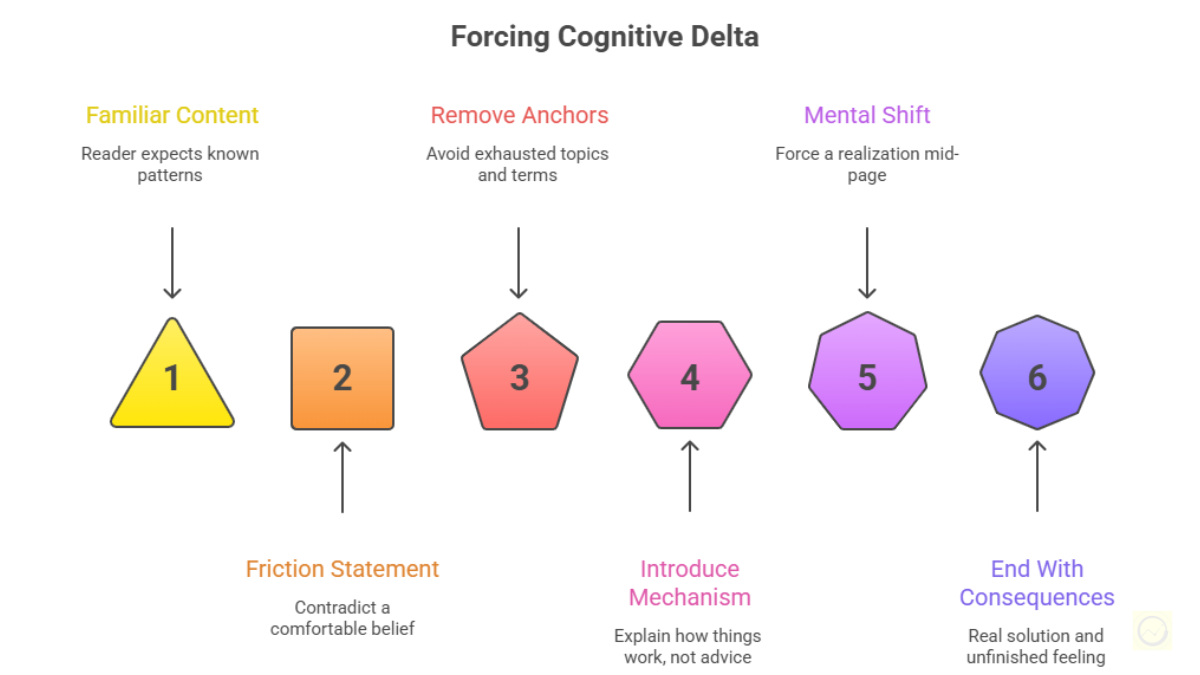
This is not a template. It’s a construction method.
1. Start With a Friction Statement (Not an Introduction)
Your first 3–4 lines must contradict a comfortable belief in your niche.
Not aggressively but calmly.
Example pattern (do not copy):
- Most pages explain how to rank. That’s why they don’t.
This creates pause and pause is measurable.
If a reader pauses, scrolls slowly, or rereads, the system logs engagement before depth.
2. Remove Familiar Anchors
Do Stop choosing topics like:
- AI SEO strategies
- How to rank faster
- Future of SEO
These are exhausted before you start:
- Define basic terms
- List tools
- Reference popular frameworks
- Mention years, trends, or updates
These anchors flatten cognitive delta because the reader already expects them.
Instead, speak as if the reader is already competent and you’re revealing something internal.
This filters casual readers and rewards serious ones.
3. Introduce a Mechanism, Not Advice
Advice feels optional.
Mechanisms feel inevitable.
Instead of:
- You should structure content this way
Use:
- This happens because the system watches X before it watches Y
When readers feel they’re learning how things work, not what to do, dwell time increases without fluff.
4. Create a Mid-Page Mental Shift
Around 35–45% into the page, force a realization.
This is the turning point.
Example structure:
- Explain a known behavior
- Reveal why it’s misunderstood
- Show what’s actually being measured
This moment causes scrolling behavior to change.
Scroll velocity drops. That’s a ranking signal.
5. End With Consequences, Not Conclusions
Most pages summarize.
End with with a real solution & result(consequences) :
- If this is true, here’s what stops working immediately
- This is why most content never recovers after 60 days
Systems favor pages that feel unfinished in a productive way.
Readers leave thinking, not closing a loop.
Why This Ranks Fast (Even on New Domains)
Because you are not competing on:
- Authority
- Volume
- Coverage
You are competing on observability, once a page proves it creates cognitive delta:
- It gets crawled more frequently
- Its internal sections get weighted independently
- It appears in synthesized answers, not just listings
This bypasses the slow trust-building phase entirely.
That’s the part nobody talks about.
How to Scale This Without Killing Quality
Produce fewer pages with multiple delta points.
One page should contain:
- 2–3 belief disruptions
- 1 clear internal mechanism
- 1 irreversible insight
That single page can outrank 50 complete guides.
What This Replaces
Stop doing these immediately:
- Long keyword maps
- Exhaustive outlines
- Beginner-friendly padding
- Generic FAQs written for coverage
They reduce cognitive delta.
The Reality Check
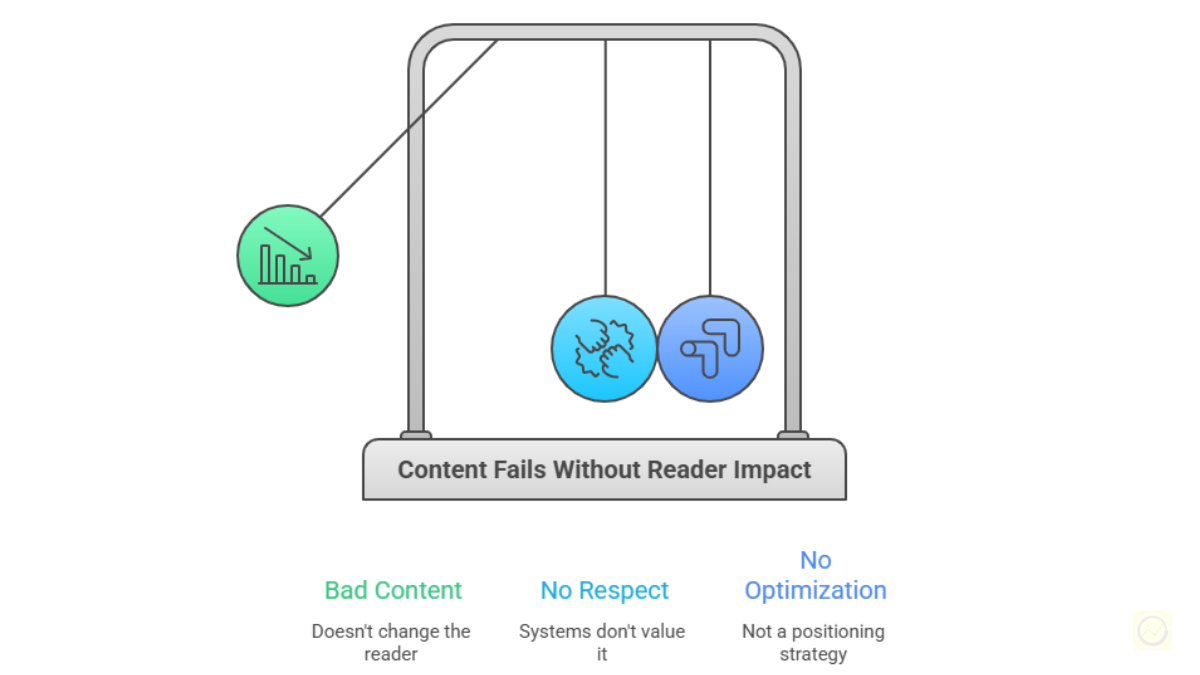
Most content fails not because it’s bad.
It fails because it doesn’t change the reader and your page doesn’t alter how someone thinks, no system will ever respect it.
This block is not optimization.
It’s positioning yourself as a source worth watching.
FAQs
No. This doesn’t manipulate systems. It aligns with how they already measure human response.
Yes. Backlinks amplify reach. They do not create observability. This does.
Yes, but only if the page teaches before it sells. Otherwise, delta collapses.
Pages built this way are usually re-evaluated within days, not months.
They can copy words. They can’t copy insight density. That’s the moat.