Believe me! A well-designed go-to-market (GTM) strategy is the key to unlocking new markets for a product or service launch and to grow the customer base. It encompasses the prerequisites and execution methods within the competitive timeline, so that brands can win in any situation by filling the need gap.
The power of a GTM strategy comes from its ability to help businesses grow. It makes sure product development, marketing, and sales work together. By using data, companies can make their GTM strategy more effective, leading to better returns.
In other words, a go-to-market strategy framework makes the process smoother for finding target audiences, building campaigns as needed, and closing the first deal.
Understanding the Power of Strategic Market Entry
Knowing how to enter a market can really help a company grow. It means looking closely at the market, who you’re up against, and what customers want. This helps find the best ways to get into the market.
The Evolution of Go-to-Market Approaches
Go-to-market strategies have changed a lot over time. Before, they aimed to reach as many people as possible. But now, with markets getting more complex, companies are going for more focused plans.
Key developments in GTM evolution include:
- Personalization of marketing efforts
- Use of data analytics for market insights
- Agile methodologies for quick adaptation
Why Traditional GTM Strategies Often Fall Short
Even though they used to work well, old GTM strategies don’t cut it anymore. The main reasons are:
- Inability to adapt quickly to market changes
- Lack of precise targeting because of poor market analysis
- Overreliance on outdated marketing channels
This shows we need a new, flexible GTM strategy. One that uses smart market analysis and keeps up with market changes.
The High-Velocity Go to Market Strategy Framework
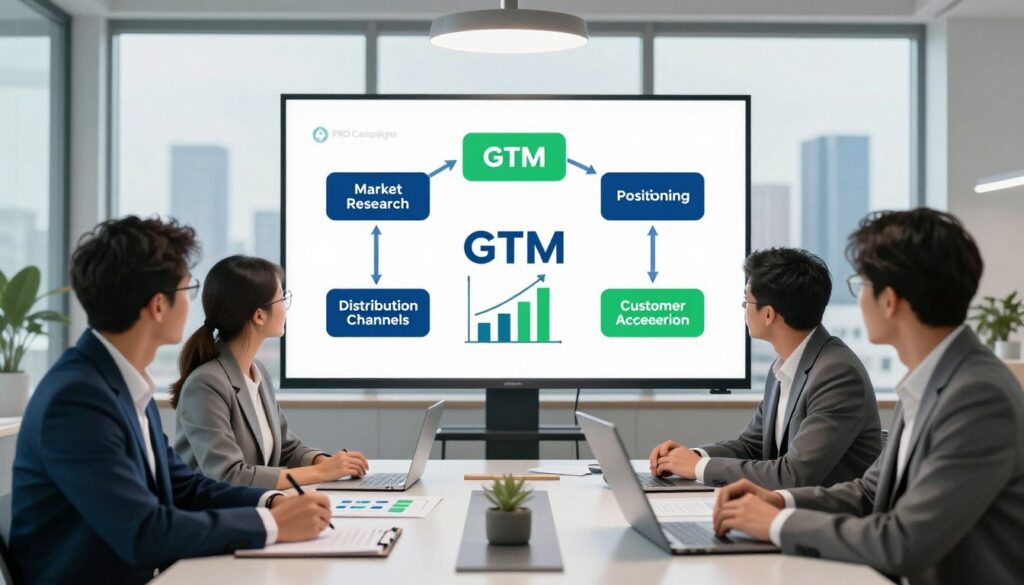
The High-Velocity GTM Strategy Framework helps businesses get customers 70% faster. It uses a detailed plan based on market trends, customer habits, and what competitors do.
This framework is flexible and can change quickly with the market. This lets businesses adjust fast when needed.
Key Pillars of the Accelerated Framework
The framework has key parts that work together for faster customer gain. These are:
- Market Analysis: Knowing the target market, including what customers want and like.
- Segmentation: Finding the most valuable customer groups.
- Value Proposition Development: Creating offers that appeal to the target audience.
- Channel Optimization: Choosing and improving the best ways to get customers.
How This Framework Delivers 70% Faster Acquisition
By combining these pillars, the framework makes getting customers faster. It cuts down on time and boosts success rates. This leads to a big jump in getting customers, up to 70% faster than usual.
Many top companies have used the High-Velocity GTM Strategy Framework with great success. For example, a SaaS company got 65% more customers in six months. An e-commerce business saw new products hit the market 75% faster.
Step 1: Strategic Market Analysis and Segmentation
Understanding your market and segmenting it is key to a good GTM strategy. This first step helps you know your audience, find opportunities, and create a strategy that gets you results faster.
Identifying Underserved High-Growth Segments
To find high-growth segments, use data-driven techniques. Look at market trends, customer habits, and demographics. This way, you can spot areas with big growth chances.
Data-Driven Segmentation Techniques
Advanced analytics tools help you segment your market. You can look at industry, company size, and buying habits. This makes your marketing campaigns hit the mark with your audience.
Prioritizing Segments for Maximum Impact
After finding your segments, pick the ones with the most growth, least competition, and best fit for your offer. This way, you use your resources wisely on the most promising areas.
Competitive Landscape Mapping
Knowing your competitors is key to standing out. Make a map to see who your competitors are, their strengths, weaknesses, and where they stand in the market.
| Competitor | Strengths | Weaknesses | Market Positioning |
|---|---|---|---|
| Competitor A | Strong brand recognition | Limited product offerings | Premium segment |
| Competitor B | Innovative products | High pricing | Mid-range segment |
| Competitor C | Excellent customer service | Limited geographic presence | Local market focus |
Creating Actionable Buyer Personas
Creating detailed buyer personas is key for targeted marketing and sales. These should be based on real data and include job roles, challenges, and buying habits.
By following these steps, your GTM strategy will be strong and focused. This leads to faster and more effective growth.
Step 2: Crafting Compelling Value Propositions
Creating a strong value proposition is key for businesses to move fast in the market. A good value proposition is the base of all marketing efforts. It makes sure the message hits the right spot with the audience and boosts sales.
To make a great value proposition, you need to know what your audience wants and needs. Look at customer data, market trends, and what competitors offer. This helps you find what makes you different.

Developing Segment-Specific Value Statements
Value statements for each customer segment are vital. By making your value proposition fit each segment, you become more relevant and appealing. This leads to more people converting.
Find out what benefits and features are most important for each group. Then, create messages that speak directly to those needs.
Message Testing and Optimization Framework
Testing your messages is a must for improving your value proposition. By trying out different messages, you can see which ones work best with your audience.
A good message testing plan includes A/B testing, listening to customer feedback, and making changes as needed. This keeps your value proposition sharp and effective over time.
Creating Conversion-Focused Content Assets
Content that aims to convert is essential to support your value proposition. This includes landing pages, emails, and social media posts. Each piece should meet the specific needs of your audience.
High-Impact Content Types by Funnel Stage
At different stages of the sales funnel, you need different types of content. For example, blog posts and social media are good for the awareness stage. Case studies and whitepapers are better for when people are considering your product.
- Awareness Stage: Blog posts, social media content
- Consideration Stage: Case studies, whitepapers
- Decision Stage: Product demos, customer testimonials
Distribution Strategies for Maximum Reach
Using the right channels is key to getting your content seen by more people. Use email, social media, and paid ads to spread your message far and wide.
| Channel | Reach | Engagement |
|---|---|---|
| High | Medium | |
| Social Media | Medium | High |
| Paid Advertising | High | Medium |
Step 3: Channel Optimization for Rapid Acquisition
Optimizing channels is key for businesses aiming to grow fast in competitive markets. It’s about finding the best channels, using resources wisely, and making sure all channels work well together.
Identifying High-ROI Acquisition Channels
Finding channels with the highest return on investment (ROI) is the first step. You need to look at past data, market trends, and how customers behave. This helps figure out which channels will bring in the most customers.
Key considerations include:
- Customer acquisition costs
- Conversion rates
- Customer lifetime value
Resource Allocation and Budget Optimization
After finding the best channels, you need to plan how to use your resources and budget. You must understand the costs and benefits of each channel.
| Channel | Primary Objective | Investment Cost | Expected ROI | Key Success Metric |
|---|---|---|---|---|
| Social Media | Brand Awareness & Reach | $1,000 | 300% | Engagement Rate / CTR |
| Email Marketing | Lead Nurturing & Retention | $500 | 200% | Open Rate / Conversions |
| Influencer Marketing | Trust & New Customer Acquisition | $2,000 | 400% | Cost per Acquisition (CPA) |
Implementing Cross-Channel Synergies
To get the most out of channel optimization, focus on making channels work together. This means coordinating efforts across different channels to give customers a smooth experience.
For example, a social media campaign can be used to drive traffic to a website, where visitors are then encouraged to sign up for an email newsletter.
Measurement and Attribution Models
It’s important to measure and attribute accurately to see how channels are doing. Use advanced analytics to track how customers interact with your brand across different touchpoints.
Agile Channel Pivoting Techniques
Businesses need to be quick to change their channel strategies in today’s fast-paced markets. Keep an eye on how your channels are doing and be ready to adjust your plans as needed.
Implementing Your Accelerated GTM Strategy
For every brand owner a high-velocity go to market strategy is essential. It helps businesses grow quickly and sustainably. By following the steps in this article, companies can speed up their GTM strategy. This leads to faster market entry and better customer interaction.
Success in implementing this strategy depends on staying agile and always improving. It’s important to keep an eye on market changes, update value propositions, and fine-tune channels. This ensures they meet customer needs as they evolve.
By adopting this strategy, businesses can reach their full GTM strategy’s capabilities. They can achieve 70% faster customer acquisition and secure long-term success. To stay ahead, companies must commit to continuous improvement and adaptability.
FAQs
A Go-to-Market (GTM) strategy is a detailed plan. It shows how a company will launch a product or service. It also explains how to reach the target audience and meet business goals.
A well-crafted GTM strategy is key for businesses. It helps them enter new markets and grow their customer base. It drives business growth.
The High-Velocity GTM Strategy Framework is a proven method. It helps businesses acquire customers 70% faster. It focuses on strategic market analysis, compelling value propositions, and channel optimization.
To find underserved high-growth segments, use data-driven methods. Analyze customer data, market trends, and competitor activity.
Creating actionable buyer personas is vital. It helps you understand your target audience’s needs and preferences. This way, you can tailor your marketing efforts and boost conversion rates.
To optimize GTM channels for rapid acquisition, focus on high-ROI channels. Allocate resources wisely and use cross-channel synergies.
Message testing and optimization are key in GTM strategy. They help refine value propositions and improve messaging. This increases conversion rates.
To measure GTM strategy effectiveness, use metrics like customer acquisition cost and customer lifetime value. Also, track return on investment (ROI) and use attribution models to evaluate channel performance.