Most SaaS teams have a document called a go to market plan. Slides are clean. Charts make sense. Yet growth feels harder than it should. The reason is simple. Most plans explain what should happen but not where things actually break.
A practical go to market strategy is less about frameworks and more about finding leakage. Leakage of attention. Leakage of intent. Leakage of trust. Once you learn how to see those leaks, progress becomes predictable. This article focuses on that gap. Not theory. Not definitions. Just working cheat codes you can apply even with a small team and limited budget.
Code 1. Define the market by need not size
Most plans start with market size. Start with pressure instead.
Ask one question
What forces the buyer to act now?
Example:
A sales tool does not win because it tracks activity, it wins because managers miss revenue forecasts without it.
This mindset grounds your b2b go to market strategy in reality and avoids chasing passive buyers.
Code 2. Choose buyers by failure patterns
This sounds uncomfortable but it saves time and money. Write down the customer profile that will struggle with your product even if they show interest. Excluding them sharpens your customer acquisition strategy and improves close rates. It also helps sales and marketing alignment because both teams chase the same type of buyer instead of anyone with a budget.
Segment buyers by how deals break.
Patterns to watch
- Deals that remains after demo.
- Buyers blocked by legal review.
- Teams unable to onboard quickly.
Code 3. Write the problem like an internal email
If a buyer cannot forward your problem statement to a boss, rewrite it.
Example
Our team keeps losing deals because follow ups break after demos.
This approach sharpens your product positioning strategy and keeps messaging grounded.
Code 4. Do conversion math before choosing channels
Teams often debate ads versus outbound too early. First map how your product creates value at each stage of use. Then choose channels that match that journey. A go to market strategy that skips this step usually overspends. This is the core of a practical product go to market framework. Value first. Channels second. Spend last.
Simple example
- 1,500 visitors.
- 4 percent become leads equals 60.
- 30 percent book demos equals 18.
- 25 percent close equals 4 deals.
At 2,500 USD per deal.
Monthly revenue equals 10,000 USD.
Improving demos to 40 percent lifts revenue without new spend. This is where a go to market strategy turns practical.
Code 5. Build demand where buyers already complain
Early b2b demand generation works best where friction is visible. Small campaigns, honest feedback, fast loops. This approach informs your demand generation strategy and avoids wasted headcount. Count conversations not impressions at this stage.
Places to watch
- G2 competitor reviews.
- LinkedIn comment threads.
- Founder led discussions.
Code 6. Treat launch as validation Point
A saas product launch strategy is not a single date. It is a controlled experiment. Set three things to learn in the first 30 days and ignore everything else. This mindset helps teams adapt quickly and protects morale when early numbers are uneven. A go to market strategy that expects perfection on day one rarely survives contact with reality.
Code 7. Price to avoid that needs second thought
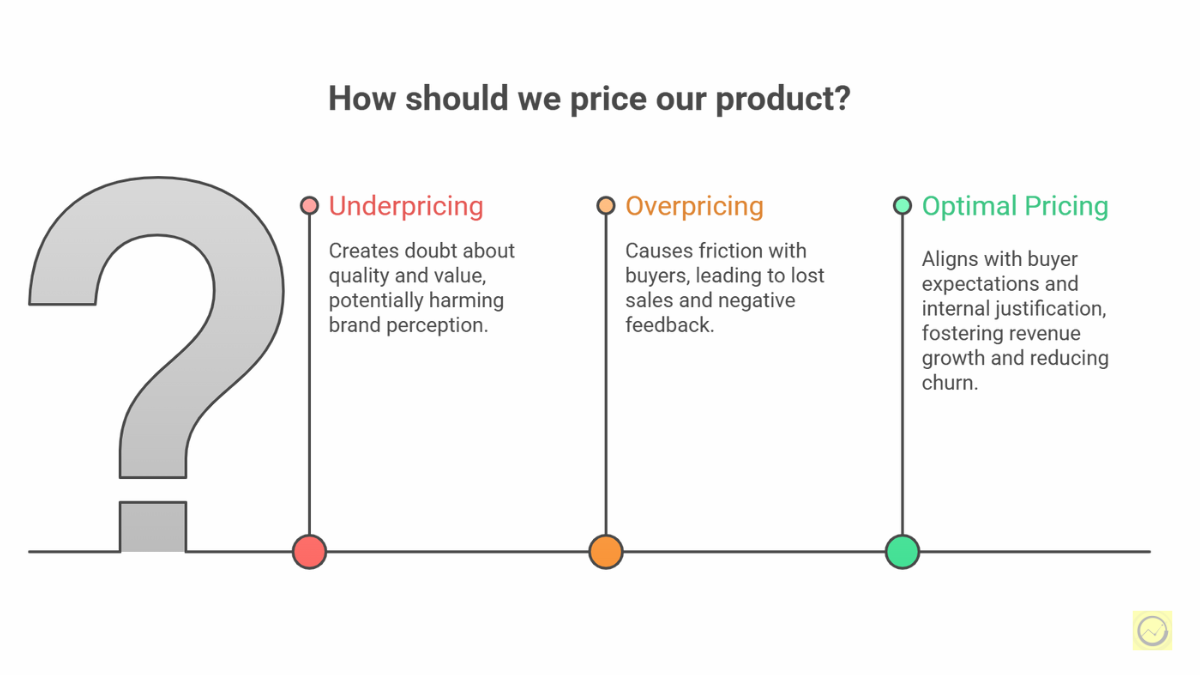
Your pricing communicates more than your homepage. Underpricing creates doubt. Overpricing creates friction. Spend time understanding how buyers justify spend internally. This insight feeds your revenue growth strategy and reduces late stage churn. Price is not math alone. It is psychology shaped by context.
Practical insight
- Below common pricing thresholds moves faster.
- Above them increase trial drops.
This directly impacts your revenue growth strategy and reduces deal fatigue.
Separate plans create friction. Shared goals create flow. Weekly reviews of pipeline and feedback keep everyone grounded. This is where sales and marketing alignment becomes real instead of theoretical. A strong go to market strategy treats both teams as two hands doing the same job.
Shared weekly view
- Leads contacted.
- Demos completed.
- Deals stalled.
This is sales and marketing alignment that actually works and supports a steady go to market strategy.
Code 9. Attack competitors on effort not features
Leakage happens when ownership changes. Lead to demo. Demo to trial. Trial to paid. Measure drop offs with brutal honesty. This is how you build a real go to market execution plan. Fixing one handoff can outperform doubling spend.
Example
Competitor setup takes 14 days.
Your setup takes 2.
Say that. Nothing else.
This approach strengthens your product marketing strategy without sounding aggressive.
Code 10. Use partners only with no shortcut
A partner go to market strategy works only when incentives and timing align. Most fail because partners are added before product clarity exists. Start with one partner, learn together and then scale. In enterprise go to market strategy, patience with partners often beats speed.
Good partner signs
- Already trusted by buyer.
- Faster revenue by selling you.
- Clear role in the deal.
This matters most in enterprise go to market strategy where cycles are long.
Code 11. Local proof beats global promises
For a global go to market strategy, start narrow. One region, One use case and One story. This approach also strengthens your market penetration strategy without spreading teams thin.
Example
Win early customers in India SaaS services.
Use proof to enter UK mid market.
This improves market penetration strategy without dilution.
Code 12. Keep the model visible and simple
Your go to market model should fit on one page. If it cannot be explained quickly, it cannot be executed well.
Include
- Buyer
- Pain
- Channel
- Conversion math
- Owner
Anything more hides problems.
Code 13. Track leading signals before revenue
Revenue comes at last place.
- Look at demo quality.
- Sales cycle movement.
- Customer questions.
These show health earlier. Over time this discipline strengthens your go to market strategy and reduces uncertainity.
Early signals
- Faster replies
- Shorter cycles
- Fewer objections
Code 14. Recheck assumptions every quarter
A quarterly reset keeps your b2b go to market strategy relevant without panic. Small adjustments compound over time.
Ask
- Is the buyer still urgent?
- Is budget still owned?
- Is timing still right?
This keeps your go to market strategy grounded and current.
You learn from losses and that’s why you should document what did not work and why. You can tick the overcomes and pending actions.
Monthly review
- What failed?
- Why it failed?
- What changes next?
Free working template you can copy
Use this as a live document, not a slide.
- Target buyer and role
- Core pain in one line
- Value promise
- Primary channel
- Conversion math
- Top leakage points
- 30 day learning goal
A simple free template you can adapt
- Use this structure as your working base
- Target customer and core problem
- Primary value narrative
- Demand sources and early signals
- Sales motion and ownership
- Key leakage points
- Learning goals for 30 days
FREE SaaS GTM Template
Download the professional template and start execution today.
Tools that actually help
Final thought to sit with
A calm and focused go to market strategy helps teams spot leakage early and fix it before it compounds. Over time this discipline builds confidence across product marketing strategy, sales execution, and leadership decisions. If you treat your go to market strategy as a living system rather than a document, it becomes a guide you trust under pressure. Save this.
FAQs
It is a clear plan for how a product reaches the right buyer, through the right channel, at the right time, with the right message. It connects product decisions with sales actions and marketing efforts so teams are not working in isolation.
A marketing plan focuses on promotion and visibility. A go to market strategy focuses on execution. It covers who to sell to, why they buy, how deals move forward, how pricing works, and where growth can leak.
Ideally before the first serious sales push. In reality, many teams build it after early traction when leaks become visible. Both work as long as the strategy stays flexible and grounded in real buyer behavior.
They over document and under test. Teams spend weeks on slides but avoid real buyer conversations. A working plan improves through use, not presentation.
Common signs include rising leads but flat revenue, long sales cycles, repeated objections, and unclear ownership between sales and marketing. These usually point to leakage, not lack of demand.
Yes. B2B and SaaS often involve longer decision cycles, more stakeholders, and onboarding friction. That means pricing, messaging, and channels must account for internal approvals and trust building.
Simple enough to explain on one page. If it cannot be understood quickly by a new hire or founder, it is too complex to execute well.
Yes. Smaller teams often move faster because feedback loops are shorter. Clear focus, direct outreach, and honest measurement matter more than spend.
At least once every quarter. Markets change quietly. Buyer language shifts. Budget ownership moves. Regular review prevents slow decline.
Count leakage and map each step from first contact to closed deal and note where momentum drops. Fixing one broken handoff often delivers more impact than adding new channels.